
Indirect Direct Evaporative Cooling (IDEC) Systems
Indirect Direct Evaporative Cooling (IDEC) Systems in Saudi Arabia.
Windmason Arabia has been engineering indirect direct evaporative cooling solutions in Saudi Arabia since 2013, becoming the Kingdom's first local IDEC manufacturer. Every unit is designed for the specific thermodynamics of the Arabian Peninsula, dry bulb temperatures of 45°C, wet bulb temperatures around 20°C, not repackaged from European catalogues built for milder climates.
The five IDEC product lines below cover every application, from residential villas, restaurants, outdoor spaces to large-scale industrial warehouses and factories. Each one is ISO 9001:2015 and CE certified, with zero compressors, zero refrigerant gases, and supply air temperatures that reach as low as 14°C.
What Is Indirect Direct Evaporative Cooling and Why Saudi Arabia Needs It?
Traditional split units and package DX systems cool air by compressing refrigerant, a process that consumes enormous power and generates significant heat outside the building. That heat feeds back into the ambient environment, contributing to urban heat island effects in cities like Riyadh and Jeddah.
IDEC takes a fundamentally different path. Hot outdoor air enters a water-cooled heat exchanger (the indirect stage) where it cools sensibly, means without gaining humidity. It then passes through evaporative cooling pads (the direct stage), dropping further to the target supply temperature.
Up to 10°C Lower temperatures
Up to 120% Wet-bulb efficiency
Up to 70 % Less increase in humidity
Up to 30% Less water consumption
100% Fresh Air
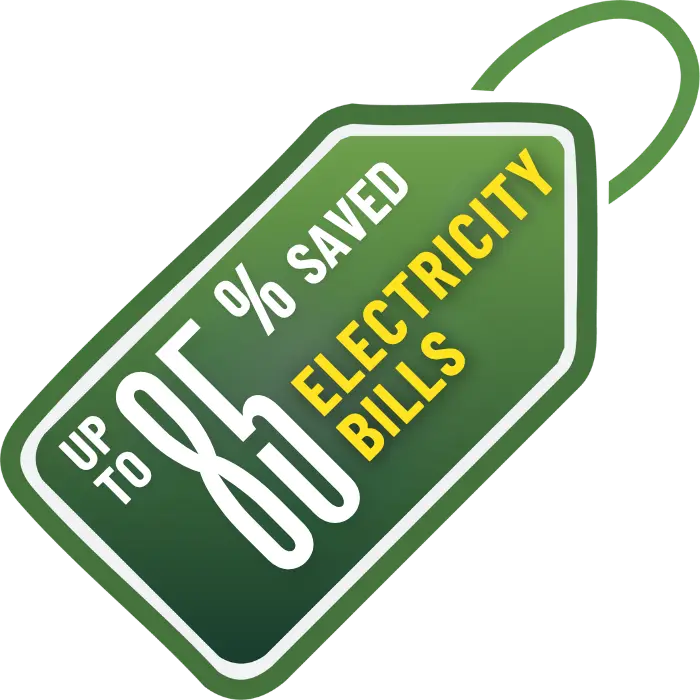
Up to 85% Energy
Saving
Advantages of Indirect Direct Evaporative Cooling (IDEC) Systems
Our IDEC Product Range Five Systems for Every Scenario
Windmason manufactures over 20 HVAC products, but the IDEC lineup is the heart of what we do. Each product below targets a specific cooling challenge, budget range, and application type. Explore full technical specs, dimensional drawings, and model selection guides.
01.
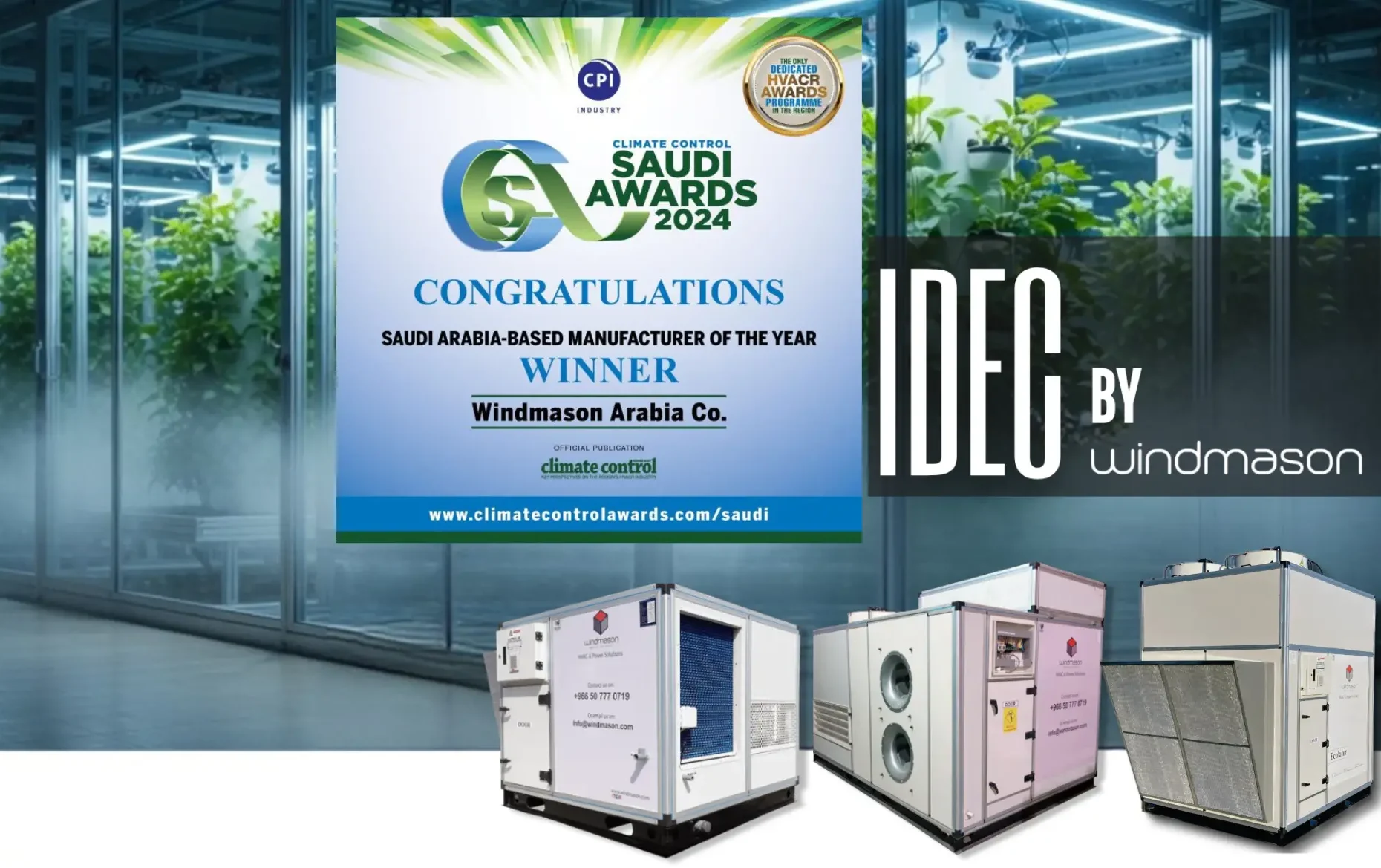
Supercool 2-Stage Adiabatic Cooling Solution
Beat Saudi Arabia’s 45°C summers without a compressor. This 2-stage IDEC unit delivers 14–16°C Supply air while cutting your electricity bill up to 85%. Built to replace coneventional HVAC system in commercial sector.
02.
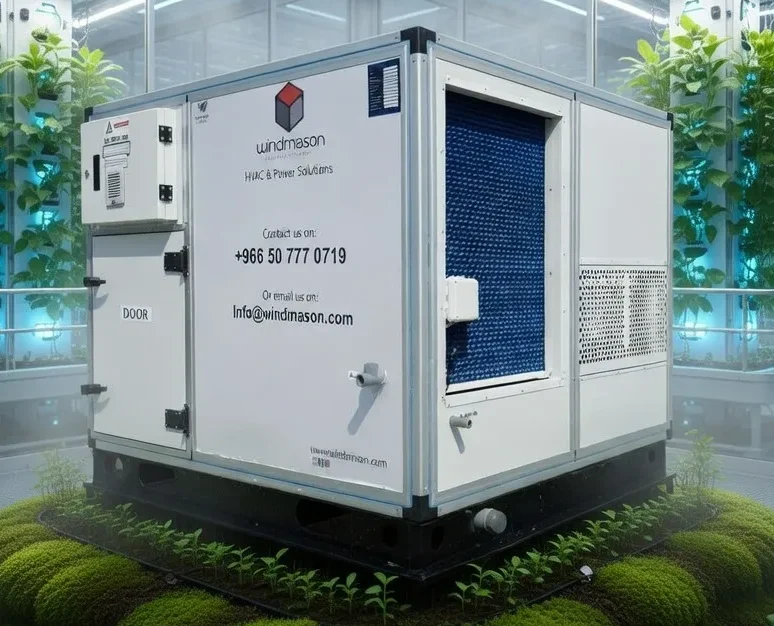
Supercool 3-Stage Adiabatic Cooling Solution
Humidity won’t stop it. The 3-stage hybrid IDEC cooler adds a DX or heat exchanger stage to maintain 17–18°C supply air with reliable, efficient cooling even in semi-humid Saudi conditions.
03.
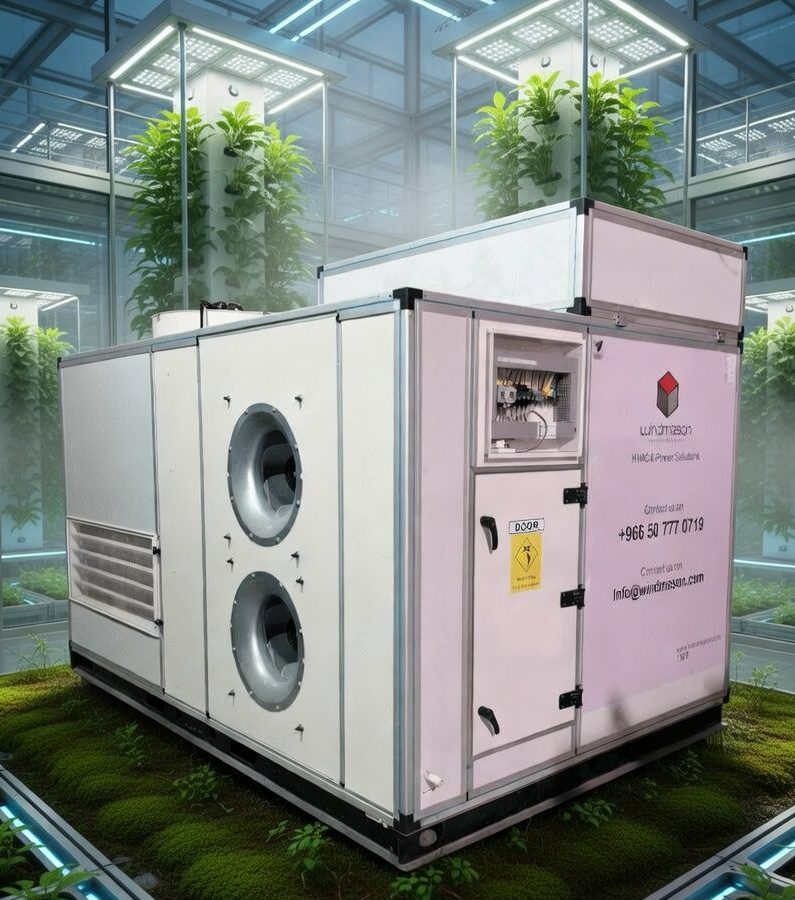
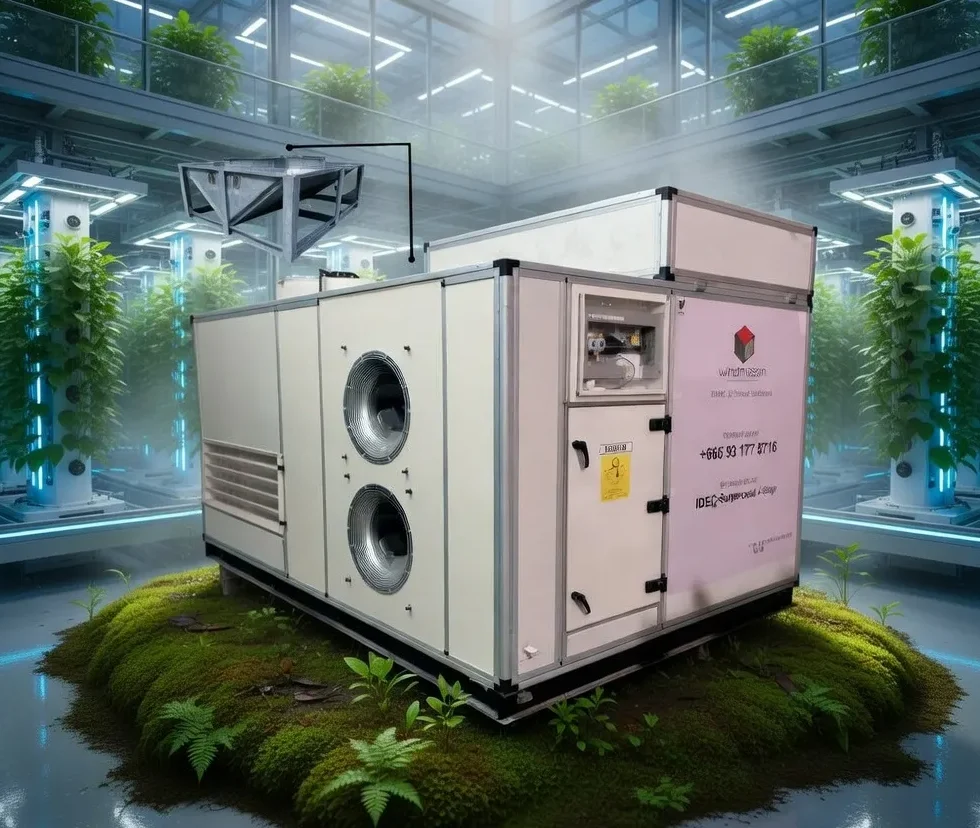
Supercool 4-Stage Adiabatic Cooling Solution
Maximum cooling for the high humid environments. Four precision stages including DX, drive supply air <18-22°C in coastal, pharmaceutical, and datacentre facilities where standard evaporative cooling simply isn’t enough.
04.
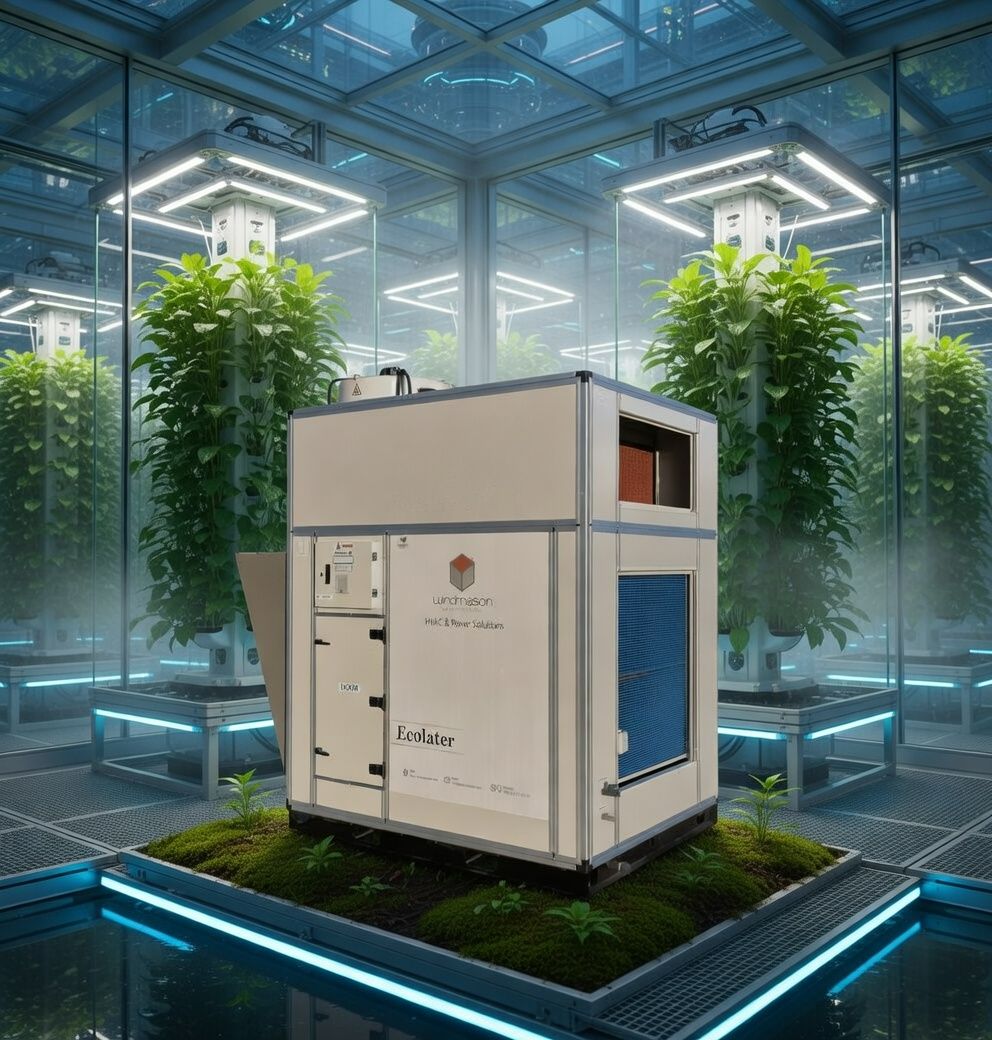
Ecolator 2-Stage Adiabatic Cooling Solution
Its same like IDEC 2 Stage solution without separate cooling tower which makes it economical. Ecolator save less energy and suitable for the environment where supply air required 20-21°C along 100% fresh air. The Ecolator cut water consumption by 70%, making it the smartest economical choice for commercial and industrial spaces.

05.
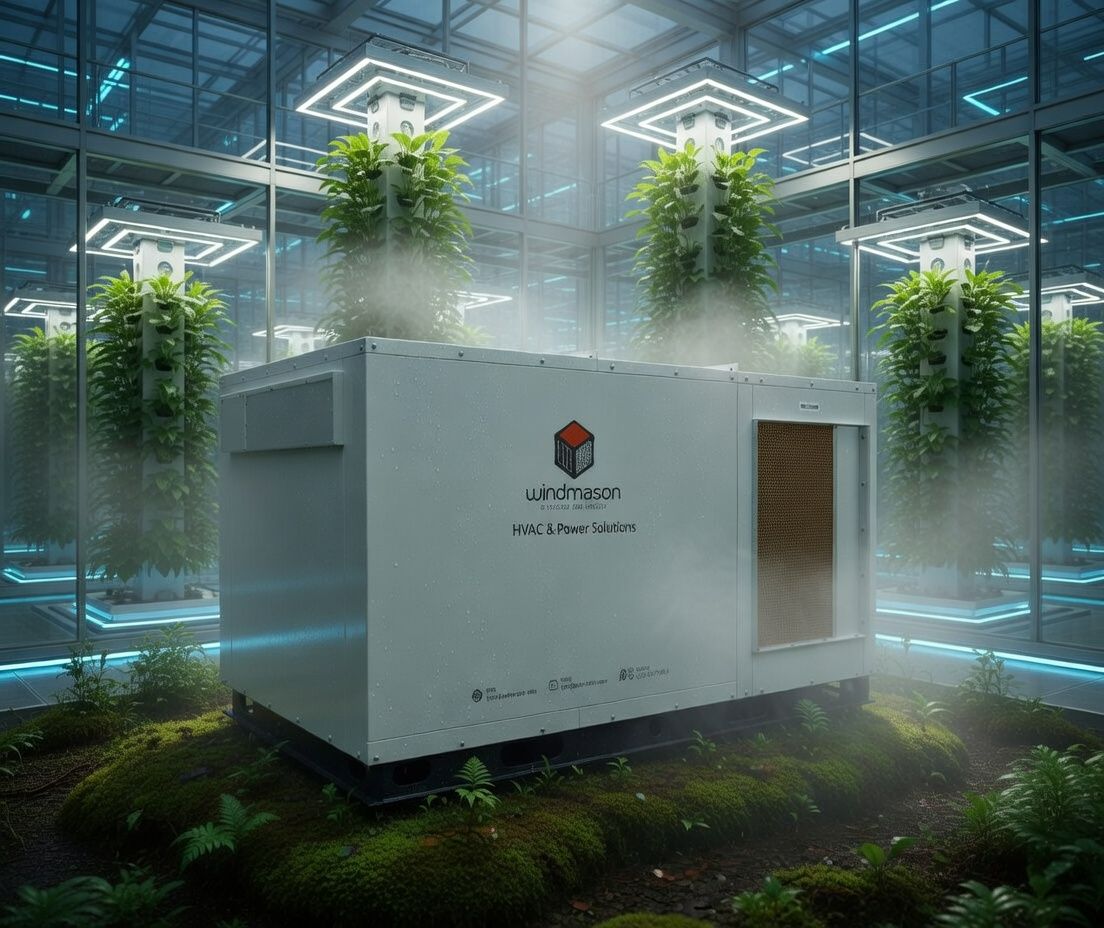
Smartcool is specially designed for home and Villas, Your home deserves better than a dusty desert cooler. Smartcool 2-stage system delivers clean, UV-treated air below 21°C using just 1.2 kW electricity only with fresher, healthier air, and far cheaper to run.
Where IDEC Cooling Works Best in Saudi Arabia?
Warehouses, factories, and logistics centers are where IDEC pays back fastest. A 5,000 m² warehouse might need 10–15 DX package units running around the clock from June to September. Replacing those with Supercool IDEC units slashes the electricity bill by 80% and eliminates compressor maintenance entirely. Clients like RAQAM Company, IHCC, and Al-Watania Plastics already run Windmason systems in their facilities.
Hospitals and schools require high indoor air quality (IAQ). Windmason IDEC units include multi-stage dust filtration, optional HEPA-grade filters, and UV light disinfection in the SmartCool residential range. Riyadh Hospital and Riyadh Schools are among Windmason’s healthcare and education clients.
Government and Vision 2030 Projects
Saudi Arabia’s energy efficiency mandate under Vision 2030 requires government buildings to reduce energy consumption significantly. IDEC’s 80–85% power reduction over DX systems makes it one of the most impactful retrofits available. The absence of refrigerant gases also aligns with the Kingdom’s commitment under international environmental agreements.
IDEC vs Desert Cooler vs DX Packaged AC?
| Criteria | IDEC Supercool | Standard Desert Cooler | DX Package AC |
|---|---|---|---|
| Electricity consumption 5-ton (2500 CFM) | 1.5 kW | 1 kW | 7.5 kW |
| Supply air temperature (at 45°C ambient) | 14–16°C | 24–25°C | 12°C (compressor running) |
| Fresh air supplied | 100% | 100% | 0% (recirculated) |
| Humidity control | Comfortable | Annoying (high) | Annoying (dry) |
| Human comfort feel | Healthy | Humid & hot | Dry & cold |
| Compressor risk in 45°C+ | None (no compressor) | None | High — frequent failures |
| Carbon emissions | Up to 85% lower | Moderate | High |
| Water consumption (L/h) | 25 L/h | 35 L/h | Not required |
| Refrigerant gases | None | None | R410A / R32 (HFCs) |
| Scalable for large areas | Up to 50-60 m² per unit | Up to 50-60 m² per unit | Up to 50-60 m² per unit |
Selecting the Right IDEC Stage Configuration?
Why Windmason Arabia for Indirect Direct Evaporative Cooling (IDEC) Systems?
Saudi-specific climate calibration:
Units are designed and tested for 45°C DBT / 20°C WBT design conditions — not European or American standards carried over from imports.
Local manufacturing = faster delivery and support:
No waiting 8–12 weeks for overseas shipments. Parts, service engineers, and commissioning teams are Saudi-based.
Vision 2030 localization alignment:
Windmason Saudi-made HVAC products support national industrial localization goals, making them a preferred vendor for government and semi-government projects.
ISO 9001:2015 and CE certification:
Both manufacturing processes and finished units are audited to international standards, a requirement for major commercial and government contracts.
Ready to Cut Your Cooling Costs by 85%?
Talk to Our Team Today
Contact our engineering team before peak summer season arrives. We'll assess your site, calculate the cooling load, and recommend the right system with full payback analysis showing how quickly IDEC savings offset the installation cost.
Contact us for
free consultation
Frequently Asked Questions.
What is the difference between IDEC and a regular desert cooler?
A standard desert cooler blows air through wet pads in a single evaporative stage, which raises humidity and provides limited cooling — especially when ambient temperatures exceed 38°C. IDEC uses a two-stage (or more) process: the air is first cooled sensibly through a water-cooled heat exchanger without gaining humidity, then passed through evaporative pads. The result is a supply air temperature of 14–20°C instead of 28–32°C, with comfortable humidity levels rather than the sticky conditions a standard desert cooler creates.
Does IDEC cooling work in Jeddah's humid climate?
Yes, with the right stage configuration. Windmason's 3-stage and 4-stage Supercool units are specifically engineered for semi-humid and coastal climates like Jeddah and Jizan, where wet bulb temperatures can exceed 25°C. The additional DX coil stage removes humidity before the evaporative stage, allowing the system to deliver effective cooling regardless of ambient moisture levels.
How much electricity does an IDEC system save compared to a DX package unit?
A Windmason Supercool 2-stage unit with 4,800 CFM capacity consumes approximately 3.0 kW of input power during cooling. An equivalent DX package unit typically draws 18–20 kW for the same airflow. That translates to roughly 80–85% electricity saving — significant for facilities running 12–15 hours daily, six months a year in Saudi Arabia's summer season.
Can Windmason IDEC units replace existing rooftop DX package AC systems?
In most cases, yes. The Supercool range is designed to connect to existing duct systems using the same duct sizing and supply air connections as a standard rooftop package unit. Windmason's engineers conduct a site assessment to confirm compatibility with your existing infrastructure before installation. No new ductwork is typically required for a like-for-like replacement.
What certifications do Windmason IDEC products carry?
Windmason Arabia holds ISO 9001:2015 certification for its manufacturing processes, and finished IDEC units carry CE certification. The company operates under SASO-compliant engineering standards and designs systems to ASHRAE 55 thermal comfort guidelines. Units are rated to operate at design weather conditions of 45°C Dry Bulb / 20°C Wet Bulb — the standard Saudi Arabia summer design condition.