Which HVAC System Saves More Energy?
In the hot and dry climate of Saudi Arabia and the broader Middle East, air conditioning is not just a luxury, it is a necessity. According to the Saudi Energy Efficiency Center (SEEC), HVAC systems account for 60-70% of total electricity consumption in buildings. This heavy energy dependency stems from widespread reliance on traditional systems like chillers and package ACs, which often operate inefficiently, especially under peak summer loads (SEEC, 2023).
But the HVAC industry is evolving. With rapid urbanization, rising energy costs, and increasing environmental awareness, developers and facility managers are seeking sustainable, cost-effective solutions. Enter VRF systems (Variable Refrigerant Flow) units known for their flexibility and improved energy performance.
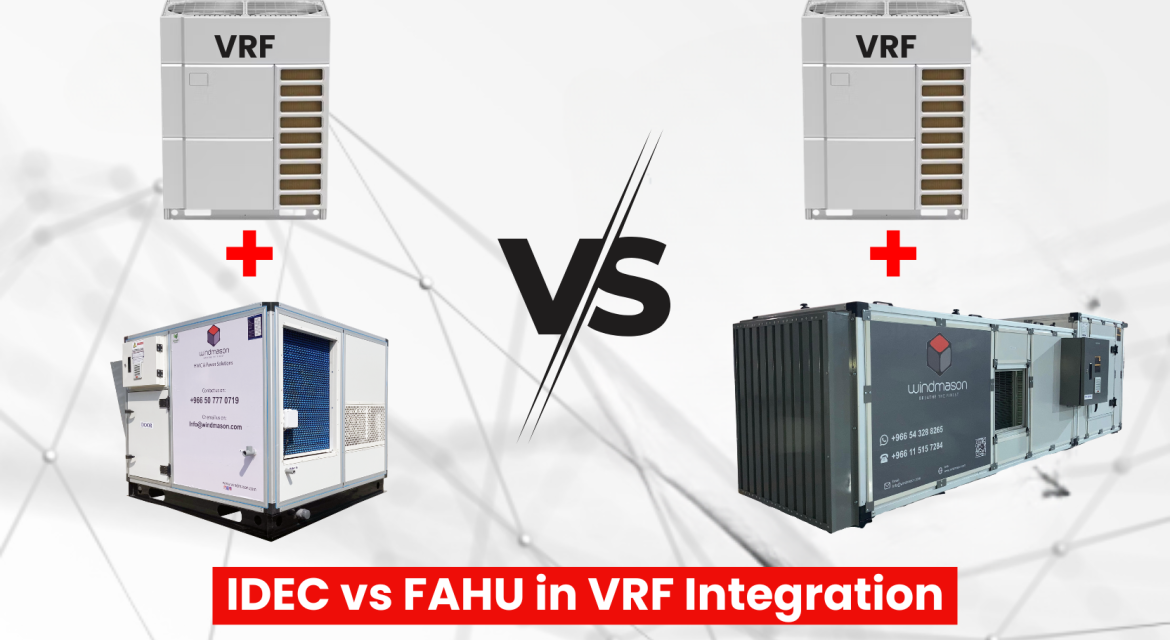
Yet, even VRF systems come with a critical shortcoming: their inability to efficiently manage fresh air intake and indoor environmental quality (IEQ). That’s where Windmasan Arabia introduces a game-changer, the IDEC (Indirect Direct Evaporative Cooling) system is a revolutionary solution poised to replace traditional FAHU (Fresh Air Handling Units) and optimize VRF integration.
As the Kingdom pushes forward with Vision 2030 and the Saudi Green Initiative (SGI), the HVAC sector must evolve. Modern VRF (Variable Refrigerant Flow) systems offer partial relief with zoned cooling and reduced refrigerant loss, but they fall short on fresh air integration, a gap that directly impacts indoor air quality (IAQ), humidity control, and energy efficiency.
Enter Windmasan Arabia’s breakthrough innovation: the IDEC (Indirect Direct Evaporative Cooling) system, a high-performance, energy-efficient alternative to traditional FAHUs (Fresh Air Handling Units) . When integrated with VRF, IDEC forms a game-changing hybrid HVAC solution for the hor and dry climate in the Middle East.
The Inefficiencies of Conventional FAHU Systems
Traditional FAHU systems are designed to bring in fresh air, cool it using chilled water coils or DX coils, and distribute it into the building. However, this process is energy-intensive:
- FAHUs cool 100% outdoor air using chilled water or DX coils, which consumes massive energy in summer temperatures exceeding 45°C.
- They contribute to increased compressor load on chillers or DX systems.
- Typically, they do not recover any waste energy from exhaust air
- In high-rise buildings, providing 100% fresh air using FAHUs leads to massive energy wastage and operational costs.
VRF Systems – A Step Forward but Not the Endgame
VRF systems, with their intelligent variable refrigerant management, offer significant benefits over traditional HVAC setups:
- Lower installation costs compared to chilled water systems
- Energy efficiency ratios (EER) as low as 0.9 to 1.1 kW/ton
- Zone-wise temperature control
- Compactness and design flexibility
However, they are not designed to handle fresh air. Two common practices used with VRFs include:
- Simple FAHU Integration:
- Supplies 5-10% fresh air (Percentage of total air)
- Cooling hot air from 45°C to 22°C continuously consumes high energy.
- HRV/ERV (Heat/Energy Recovery Ventilation):
- Transfers energy from exhaust air to incoming air
- Ineffective in extreme desert conditions where intake air exceeds 48°C
- Limited effectiveness in extreme climates like Saudi Arabia (ASHRAE 90.1).
This leaves a performance and compliance gap in terms of ASHRAE standards, LEED certifications, and overall occupant health and comfort.
Introducing IDEC – The FAHU Replacement We Need
Windmasan Arabia’s IDEC solution (Indirect Direct Evaporative Cooling) offers a transformational leap in HVAC design, particularly when paired with VRF systems. Here’s how IDEC addresses all the pain points of conventional FAHUs and HRV systems.
1. 100% Fresh Air at Low Energy Cost
IDEC systems can supply 100% outdoor air while consuming up to 80% less energy compared to conventional FAHUs.
“Research published in the International Journal of Refrigeration confirms that IDEC systems can operate at 0.2 to 0.4 kW/ton under dry climatic conditions—a perfect match for Saudi weather ” (Alhazmi & Ahmed, 2022).
2. Superior Cooling Efficiency
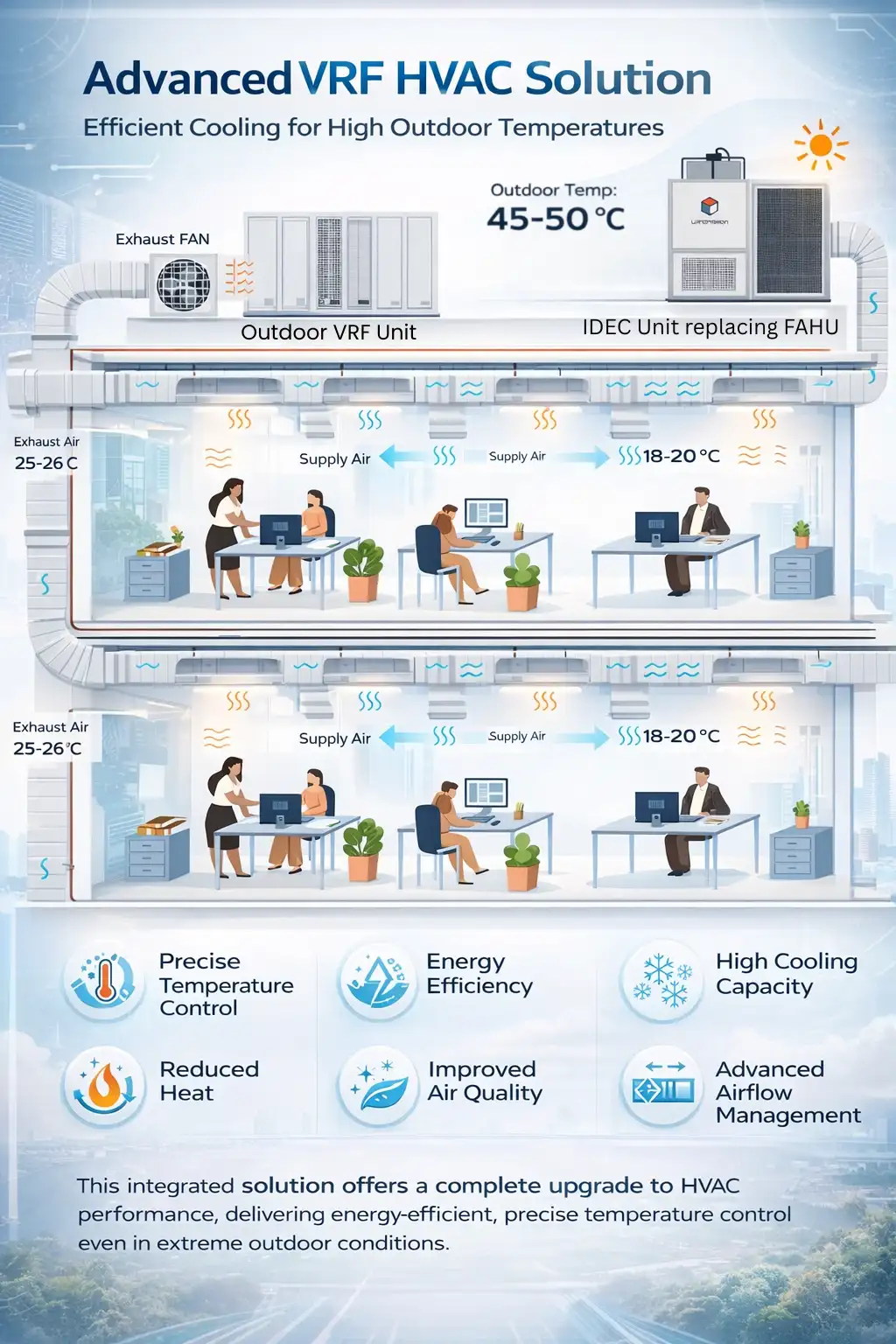
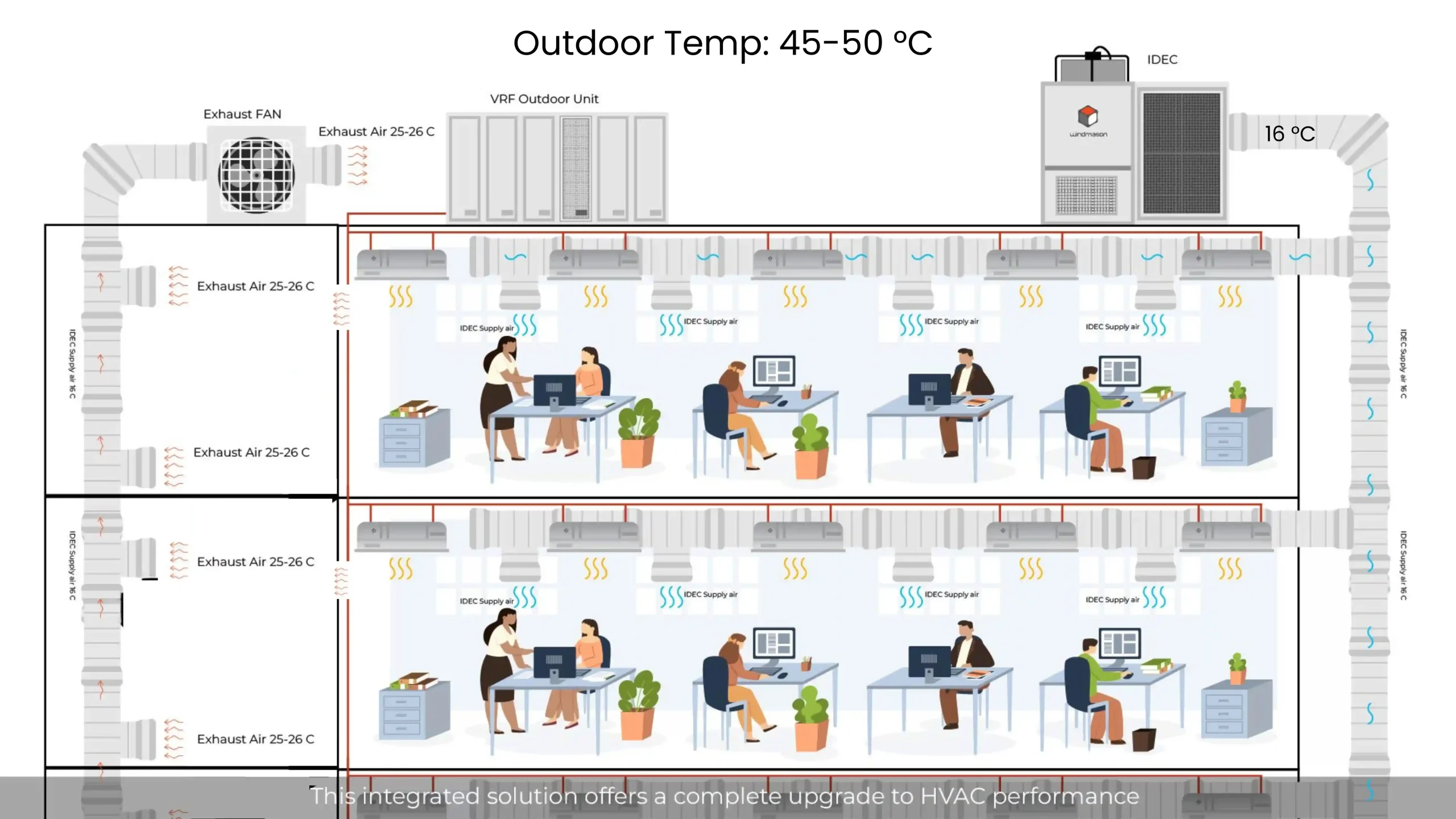
- Reduces outdoor air temperature from 45°C to as low as 15°C-16°C
- Significantly reduces the cooling load on VRF indoor units
- Prevents VRF compressor overloading during peak hours
3. Enhanced Humidity Control
Unlike standard systems that require dedicated humidifiers in hot and dry climates, IDEC naturally maintains an ideal humidity ratio (35-48%) by adding sensible moisture during the cooling process (ASHRAE 62.1).
4. Improved Indoor Air Quality (IAQ)
VRF systems are energy-efficient on their own but lack fresh air supply and only recirculate the same indoor air which accumulate indoor pollutants like VOCs (from furniture, paint), odors, human bioeffluents, dust, and pathogens. To get the fresh air the only way out were costly FAHUs and HRVs. IDEC systems have the ability to provide 100% fresh air solution, maintain comfortable Indoor Air Quality (IAQ) while cooling the outside air as well.
Additionally, IDEC includes high-performance filtration systems to eliminate dust, pollen, and pollutants, ensuring compliance with LEED, WELL, and ASHRAE standards (LEED v4 IEQ).
5. Smart Integration with VRF
- Exhaust air (22°C-24°C) from inside can be channeled near Outdoor VRF condensers to enhance heat rejection efficiency
This recycling lowers the ambient temperature around outdoor units, leading to higher COP (Coefficient of Performance) for VRF units
Why IDEC + VRF is the Future of HVAC in Saudi Arabia?
This hybrid model solves the Middle East’s toughest HVAC problems:
From 90kW to Just 5.5kW: Massive Savings
- Traditional FAHUs consume massive energy (approx. 90kW for 10,000 CFM), especially when bringing down 45°C to 22°C.
- In comparison with FAHUs, Windmason IDEC handles the better airflow and lowers the temperature even further to 15–16°C using only 5.5kW.
- Reduced CO2 emissions and alignment with Saudi Green Initiative (SGI)
- Energy bills go down, VRF systems run cooler and longer, reduced compressor runtime, less maintenance, longer equipment lifespan
LEED and Estidama Ready, Helps achieve sustainability certifications
Case Studies and Simulations
Recent pilot projects and CFD simulations run by Windmasan Arabia demonstrated:
- In a 20,000 CFM system, replacing FAHU with IDEC reduced energy use by up to 55% (Younis & Khan, 2021)
- In a Riyadh high-rise, air exiting IDEC was recorded at 15.8°C, reducing VRF condenser input load by 20 to 25%
- IDEC maintained indoor relative humidity (RH) between 35%-48% even during June peak heat
These real-world tests confirm IDEC’s performance is not just theoretical but proven in harsh Gulf environments.
The Financial Equation – CapEx and OpEx Comparison
| Feature | IDEC (Indirect Direct Evaporative Cooling) | FAHU (Fresh Air Handling Unit) |
|---|---|---|
| Cooling Method | Water-based evaporative cooling | Mechanical cooling using refrigerant or chilled water |
| Compressor | ✖ Not required | ✔ Required |
| Energy Consumption | Very low | High |
| Refrigerant | ✖ None | ✔ Uses refrigerant |
| Fresh Air Supply | 100% fresh outdoor air | Usually 100% fresh air |
| Operating Cost | Low | High |
| Maintenance | Low | Moderate to High |
| Ideal Climate | Hot and dry climates | Any climate |
| Sustainability | Very high | Moderate |
Return on Investment (ROI) for IDEC integration is significantly higher, especially in commercial and high-rise buildings where ventilation demand is substantial.
IDEC is the Future of Fresh Air Ventilation
Saudi Arabia’s HVAC sector is entering a new phase of innovation. Windmasan Arabia’s IDEC solution, when integrated with VRF systems, addresses every shortfall of conventional fresh air systems like FAHU. It is more energy-efficient, cost-effective, environmentally friendly, and aligned with global IAQ and sustainability benchmarks. Maintaining good IAQ (Indoor Air Quality) requires proper ventilation for indoor spaces. Windmason IDEC system ensures optimal fresh air flow to support human health while carefully managing energy consumption, offering the best of both comfort and sustainability.
As we move toward net-zero buildings and smarter urban infrastructure, IDEC will play a pivotal role in redefining HVAC strategies for the Middle East.