Preventive HVAC Maintenance in Saudi Arabia: Stop Breakdowns, Energy Drift and Comfort Complaints
Learn how condition-based preventive maintenance programmes in Saudi Arabia protect critical cooling capacity, prevent creeping energy drift, and extend asset life in extreme ambient heat.
takeaway
An HVAC system does not wake up one morning and suddenly become inefficient. More often, performance degrades through small, cumulative changes: loaded filters, fouled condenser coils, slipped fan belts, drifting sensors, stuck bypass dampers and uncalibrated controls.
That is why preventive HVAC maintenance in Saudi Arabia should be managed as a performance discipline rather than a tick-box chore. Routine work should defend design efficiency, protect indoor air quality and prevent emergency breakdowns during extreme 50°C summer design days.
Preventive HVAC maintenance starts with criticality
Not every asset deserves the same task frequency. A comfort unit serving a low-risk store room does not carry the same business exposure as a central chiller plant, a hospital surgical theater AHU, or a high-density data center cooling train.
Build an asset register and classify equipment by safety, operational continuity, tenant comfort and financial impact. This prevents a common maintenance failure: teams complete hundreds of low-value checklist items on secondary split units while critical chillers, AHU/FAHUs and primary pumps experience unmonitored degradation.
Filters: manage pressure drop and air quality together
A filter is not good simply because it looks clean, and it is not bad only because it looks dirty. The true metric is the differential pressure (ΔP) across the bank and the indoor air quality delivered to occupied zones.
In Saudi Arabia’s dust-heavy climate, particulate loading increases fan static resistance, causing fan energy to surge or supply airflow to drop. Fit differential pressure gauges across filter banks and replace media based on measured resistance limits according to ASHRAE Standard 52.2-2025 rather than arbitrary calendar dates.
Coils & condenser-side maintenance in Saudi heat
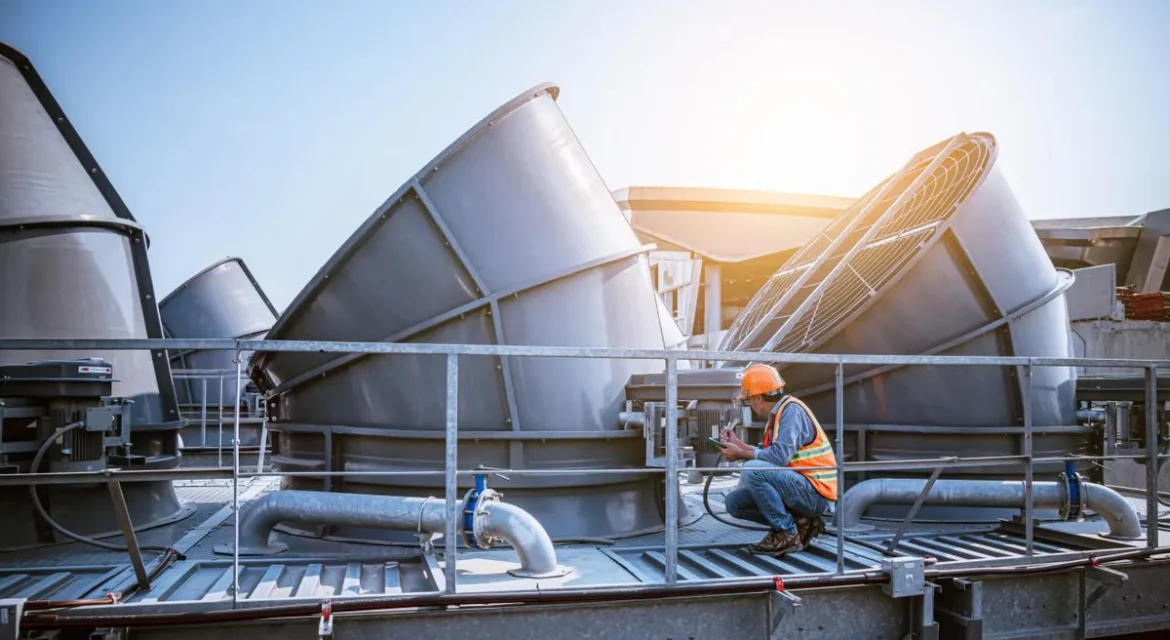
Air-cooled equipment faces extreme 45°C–50°C ambient temperatures exactly when cooling demand peaks. Dirty condenser coils force head pressures up, causing compressors to draw excessive current, trip on high-pressure limits, or prematurely fail.
Keep outdoor condenser coils clear with regular low-pressure washdowns. For facilities utilizing water-cooled chillers, monitor cooling tower water chemistry, approach temperature, blowdown rates, and bio-growth to protect shell-and-tube heat exchange efficiency.
For facilities looking to advance beyond periodic maintenance logs, Windmason’s EcoEdgeAI smart optimization platform provides automated fault detection, continuous kW/TR tracking, and real-time efficiency alerts.
Fans, belts and sensor calibration deserve maintenance too
Building automation systems and variable frequency drives make decisions based on sensor inputs. A temperature or enthalpy sensor drifting by just 1.5°C can trigger continuous simultaneous cooling and heating, improper economizer mode, or excessive chiller staging.
Regularly calibrate BMS sensors against certified reference instruments, verify damper actuator positions physically against screen readouts, and check V-belt tensions to avoid wasted motor kilowatt-hours.
Measure energy drift, not only breakdowns
The absence of emergency equipment trips does not prove efficient operation. Track normalized performance indicators: kW per Ton (kW/TR) for chillers, supply/return delta-T, and fan kW per 1,000 CFM. A 10% drift in kW/TR signals urgent maintenance before an expensive failure occurs.
A practical 5-point monthly review protocol
Each month, facility engineering managers should review these five operational questions:
-
01Which assets generated the most occupant comfort complaints? Identify chronic hot-spots and ventilation bottlenecks across facility zones.
-
02Which equipment consumed the most corrective technician hours? Flag repetitive breakdown items and chronic maintenance sinks.
-
03Where did differential pressure or delta-T deviate from baseline? Isolate airside filter loading and waterside fouling before compressor tripping occurs.
-
04Are sensor calibrations up to date? Verify critical BMS temperature and humidity sensors against calibrated instruments.
-
05What root-cause changes are required for next month? Convert maintenance findings into prioritized engineering actions rather than repetitive checklists.
Frequently asked questions
Latest Published Insights
Warehouse Cooling in Saudi Arabia
Struggling with warehouse heat and high AC bills? Learn how Saudi warehouses can use smarter airflow, IDEC and...
›Read Article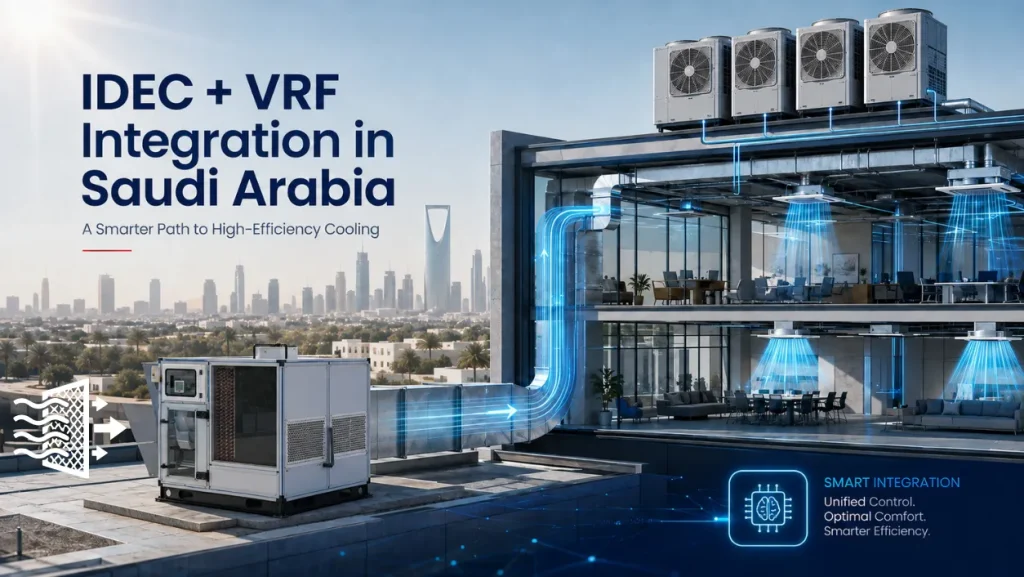
IDEC + VRF Integration : Smarter High-Efficiency Cooling
Discover how IDEC, VRF and intelligent HVAC controls can work together to reduce cooling loads, improve IAQ and...
›Read Article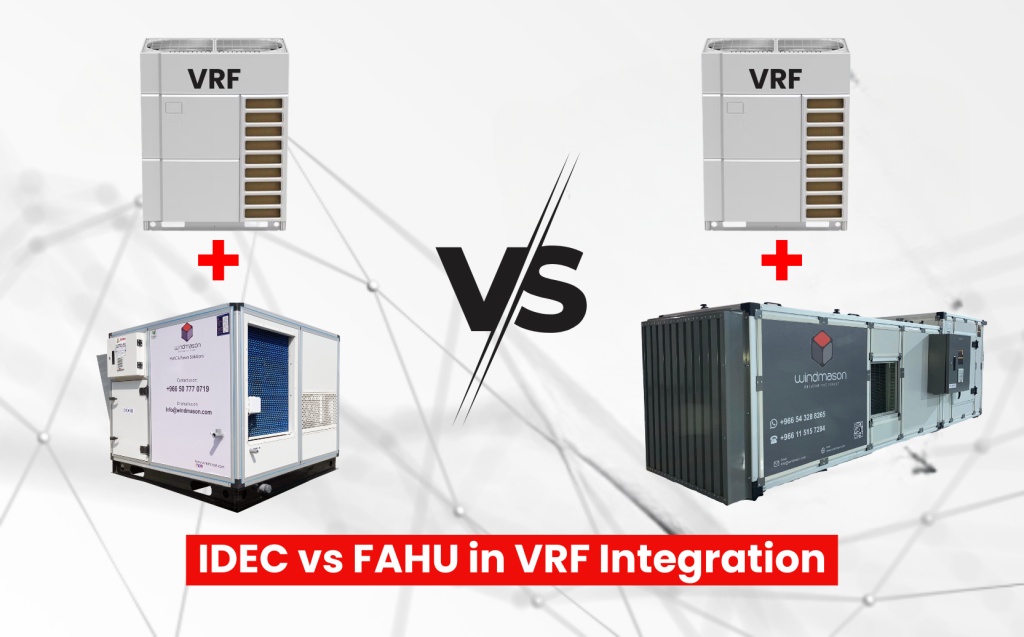
IDEC vs FAHU in VRF Integration
IDEC vs FAHU in VRF Integration: How Windmason IDEC Redefines Energy-Efficient HVAC Solutions in Saudi Arabia and Middle...
›Read Article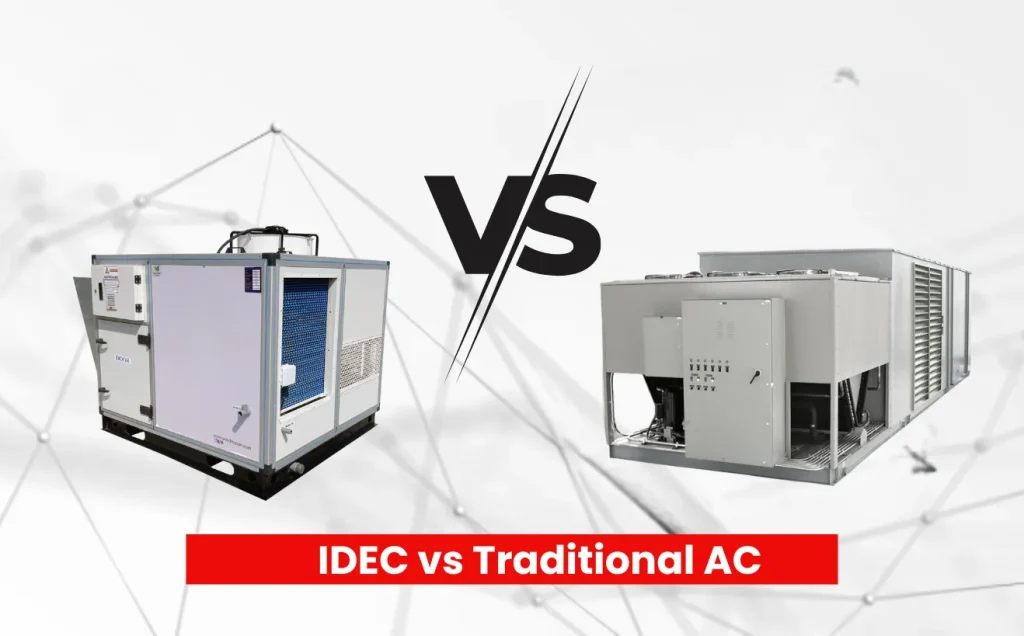
IDEC vs Traditional AC Units: Key Differences
Compare IDEC indirect-direct evaporative cooling with traditional air conditioners. Learn how IDEC vs Traditional AC Units differ in...
›Read Article
IDEC a Sustainable Cooling Solution
Let’s explore how Indirect Direct Evaporative Cooling (IDEC) can revolutionize climate control by offering an energy-efficient solution.
›Read Article
Windmason Arabia Partners with EcoEdgeAI
Learn more about energy efficiency and cooling solutions in Saudi Arabia.
›Read Article